


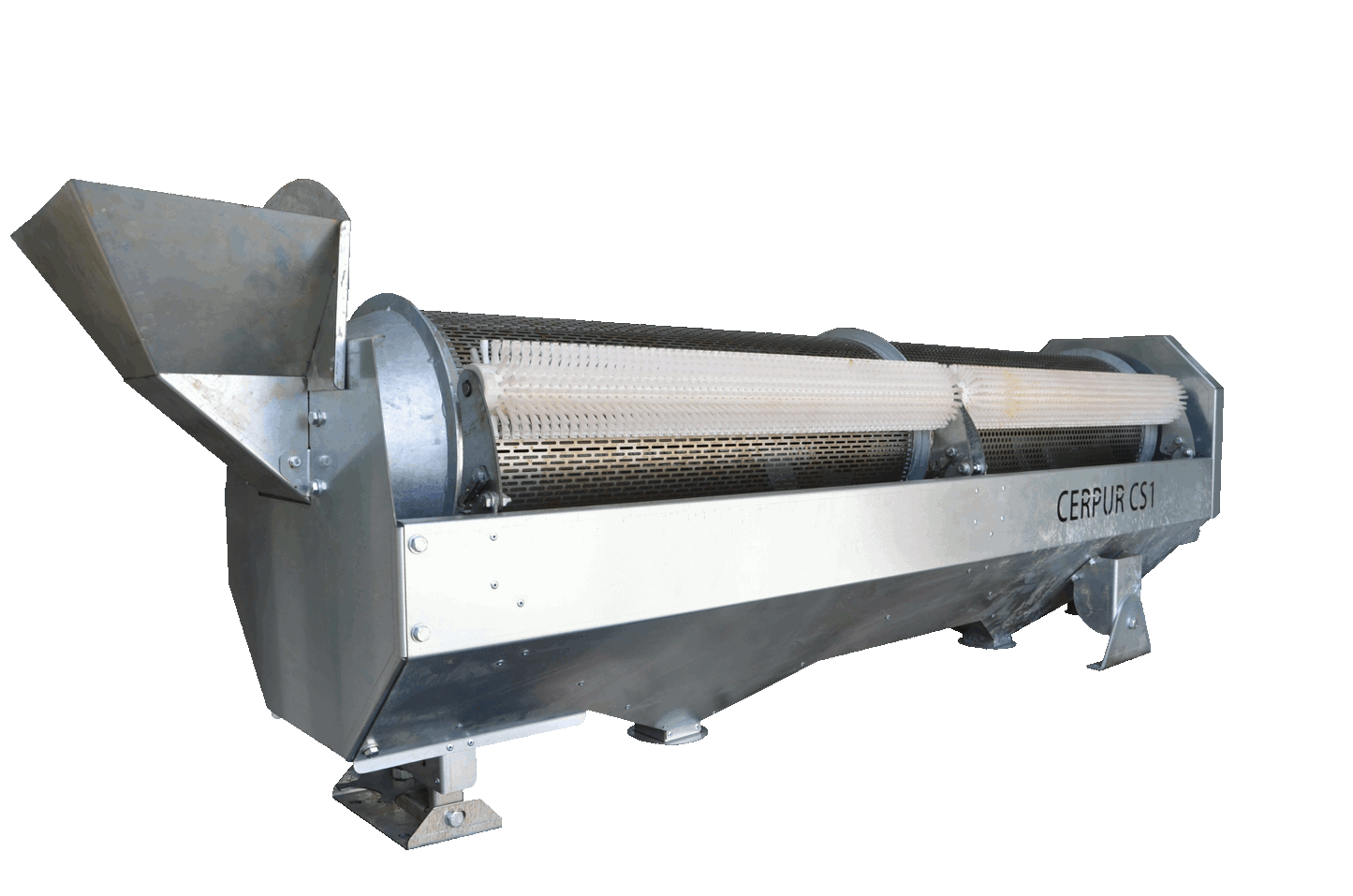
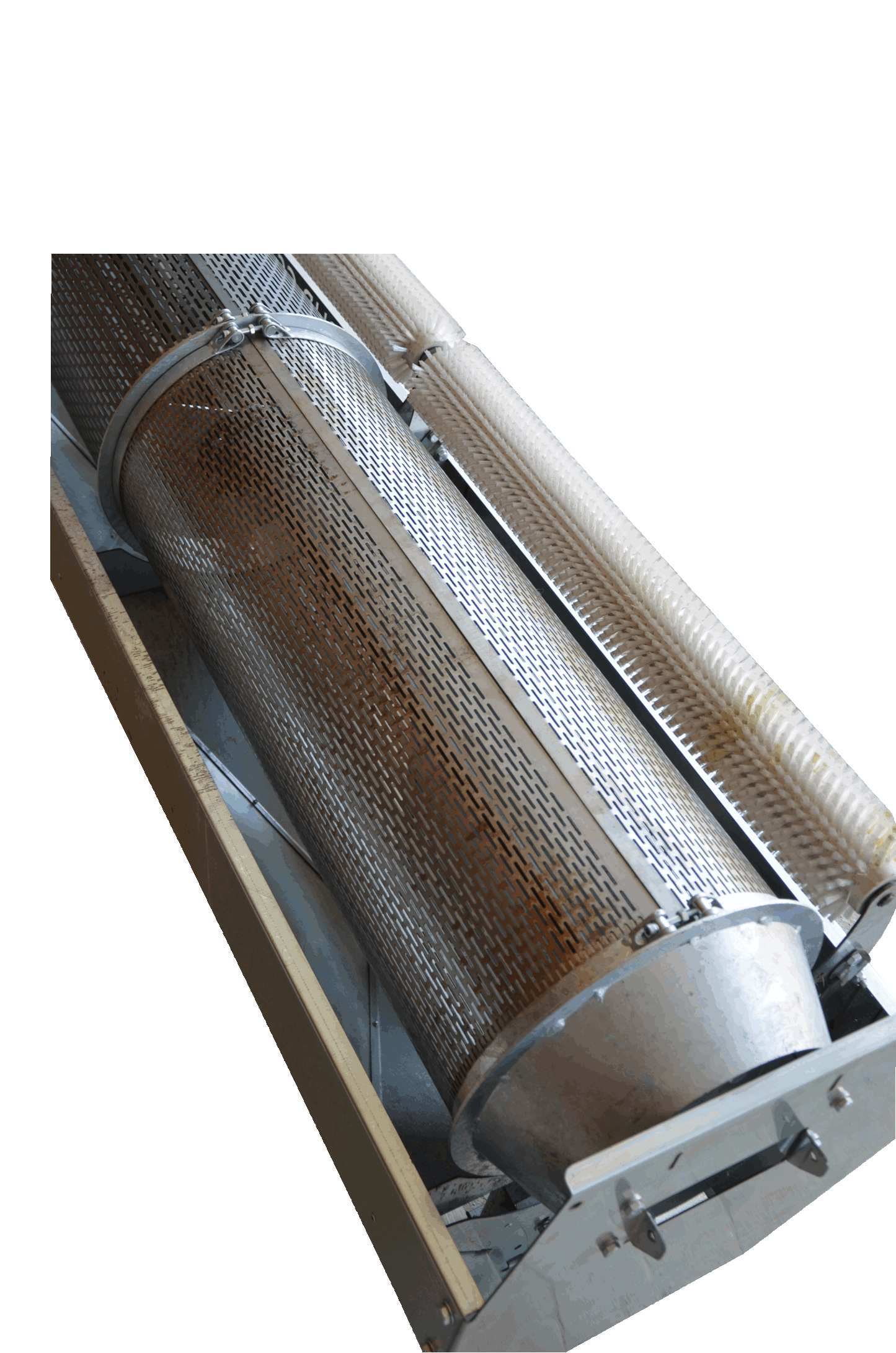
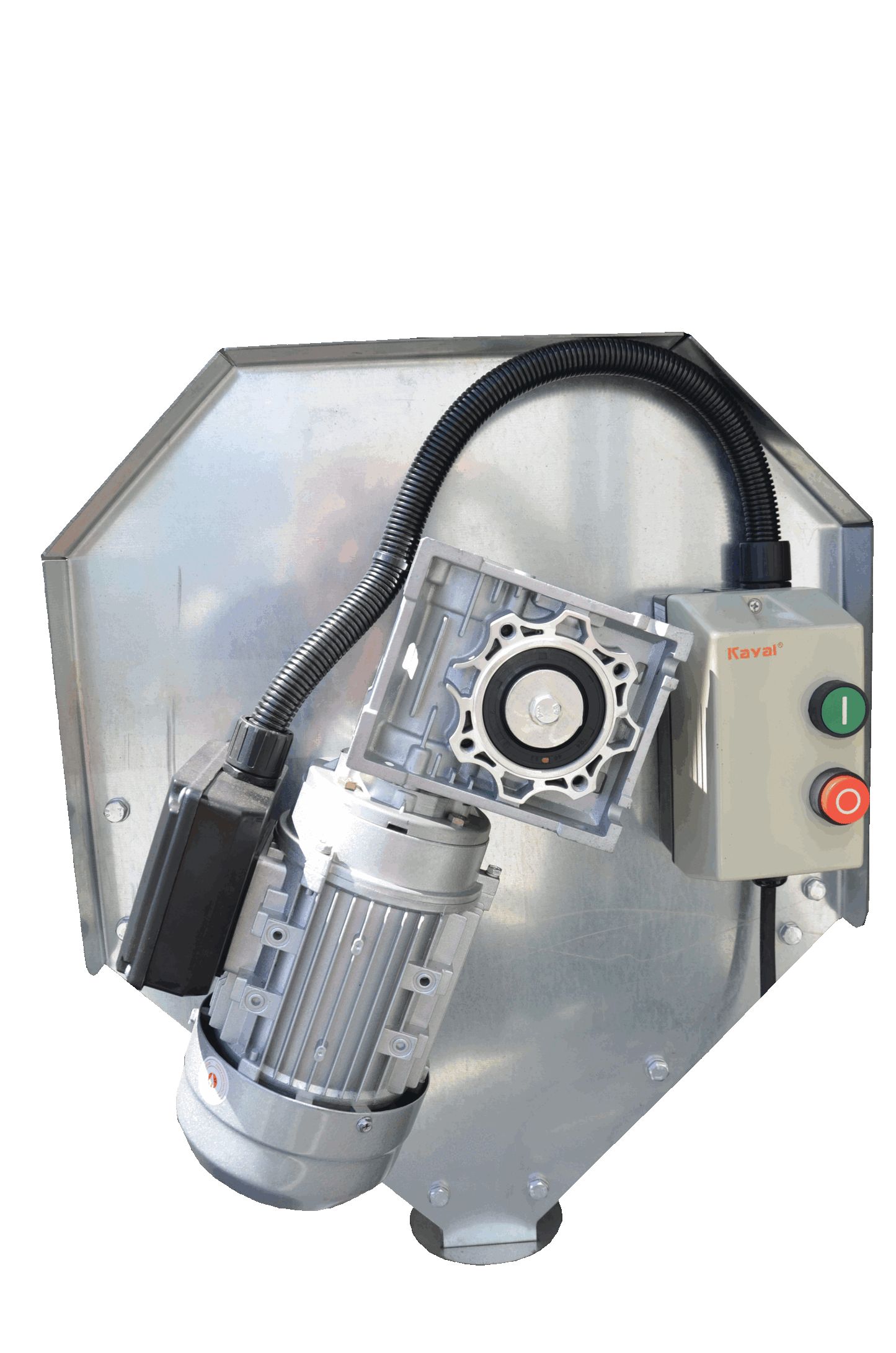
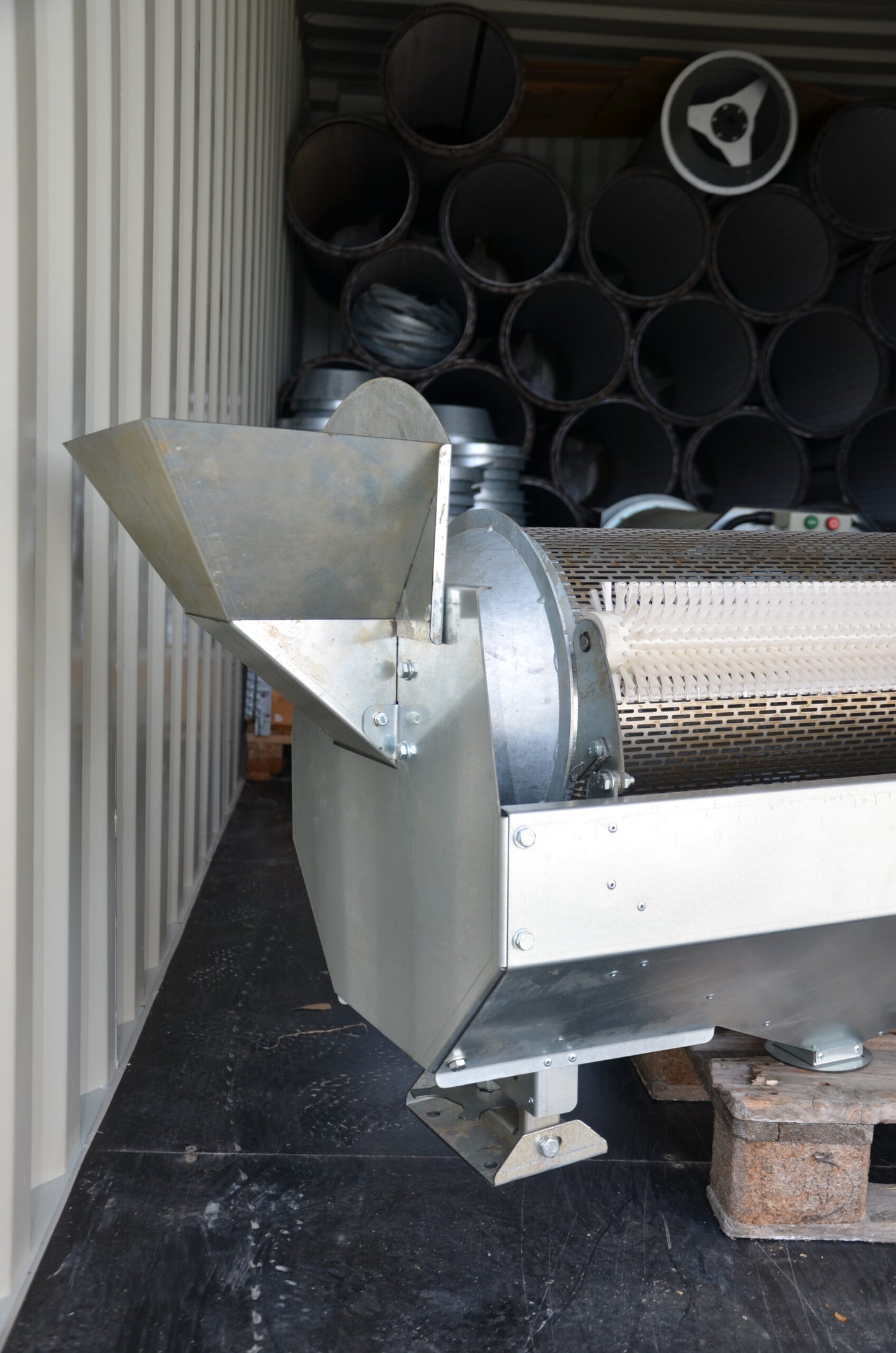
When should you use an indented drum type cleaner
rather than a vibrating screen cleaner?
The distinction comes down to what you're separating by: screens sort by width/thickness, while indented cylinders (drum separators) sort by length. That difference determines when each is the right tool.
Use an indented drum cleaner when:
1. Contaminants are the same width/thickness as the grain but different length
This is the classic case screens can't solve. Wild oats in wheat, for example, are similar in cross-section to wheat kernels but a different length — a screen lets both through, but an indented cylinder's pockets pick up the shorter (or longer) grain and lift it out into a separate trough while the other passes through.
2. Separating broken kernels from whole kernels
Broken grain is often close to the same diameter as whole grain but shorter.
Drum separators excel at pulling out broken kernels that screens would pass straight through with the good grain.
3. Removing specific weed seeds by length rather than size
Common problem seeds like wild oats, brome grass, or other elongated contaminants in cereal crops are a textbook use case — this is actually the machine's original purpose (the "wild oat separator").
4. High-value seed grain where precision matters more than speed
Because indented cylinders separate on a single, precise dimension (length), they're often used as a secondary/final cleaning stage after screens have already removed the coarse and width-based impurities — particularly for certified seed production.
Use a vibrating screen cleaner when:
- You're removing material that differs in width or thickness (chaff, dust, stones, oversized debris)
- You need high throughput — screens generally process larger volumes faster
- The contamination is a first-pass, bulk cleaning job rather than a fine separation problem
In practice, most serious cleaning setups use both in sequence: screens first to strip out the bulk of chaff, straw, stones, and oversized material, then an indented cylinder as a secondary
pass to pull out same-size-but-wrong-length contaminants like wild oats or broken kernels that the screens couldn't catch. Relying on a screen alone when your problem is a same-diameter weed seed or broken kernel just won't work — that's the scenario that specifically calls for a drum.